
10-Day Vipassana Retreat: My Experience and What to Know
A 10-day Vipassana course (most people call it a retreat) is a silent meditation course: no talking, no phone, no reading or writing, and 10+ hours of meditation a day. I sat mine at the Dhamma Bhumi centre in the Blue Mountains, Australia, this September (in the S.N. Goenka tradition). Hands down, it's one of the most intense "travel inwards" experiences I've ever been through. Here's what it was like, and what to know first.
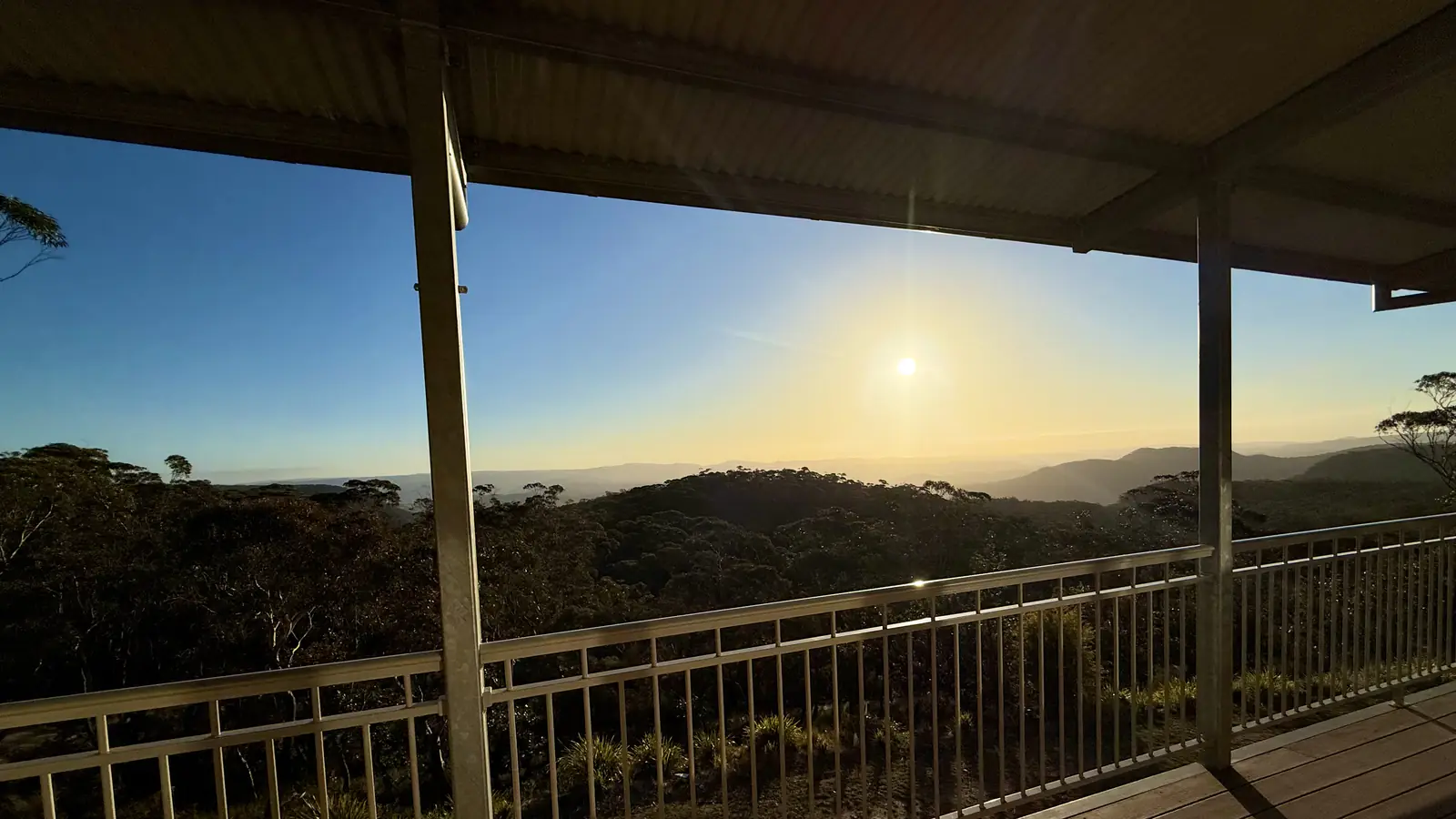
Could you go ten days without saying a single word?
No technology, no music, no books or notebook, not even eye contact with the person sitting next to you is allowed... Only you, your own mind and more than 10 hours of meditation a day.
Just so you know, that's what I signed up for this September. (And I talk for a living!)
I still can't believe I meditated for over 100 hours in those ten days. That's roughly two and a half full-time working weeks, spent sitting still with nothing but my own mind.
So... Why did I do it?
I was tired of the modern day noise. The ping, ding and ring of every notification. The social media feeds telling us how to live, how to make money, how to travel more, how to be fit. The A.I. hype that keeps suggesting we're falling behind unless we join their programme…
With all the technology and A.I. development, we've become more "productive" than ever, and yet at the same time we spend far less time sitting with our own mind. It's like, the more "productive" we become, the more workload we get on the plate somehow… So one way or another as a collective, we face cognitive overload without talking about it enough.
My last two years had been full. More than seven work events across continents, while I was speaking on stage, facilitating workshops, DJing, building community, networking, content creating… all while coaching my private clients remotely and supporting my course students, and so much more in my personal life too (including a heartbreak after 5 years of being single…)
From the outside they looked like two great years of travelling, and in many ways they were. On the inside, I could feel the weight on my shoulders, and knots in my mind that no amount of “doing” seemed to loosen. Somewhere in all of it, I'd stopped being able to hear myself.
This was even though I'm a mindset coach and a meditation practitioner myself, and I've spent years helping clients work with their minds. I also know a line I've built my work around: travelling outwards changes what you see. Travelling inwards changes who comes home.
To travel to know thyself. To nurture better self-awareness. To clarify our self-identity. And after the past year of constant travelling, I could feel called going deeper into my own inner dimension.
So here are the questions I took into those ten days, and the ones this post will answer. What happens to a busy, capable mind when you take away every distraction it relies on? What's left when the noise finally stops? And why did a freezing morning on Day 7 stop hurting the moment I stopped fighting it?
If you've ever felt overwhelmed by the modern pace, or strangely out of touch with yourself despite everything you've achieved, this one's for you. I'll walk you through what the challenge involves, how my mind changed across the ten days, the lessons I brought home, the mistakes I'd avoid and whether you should try it.
The real struggle started on Day 0
I knew I'd be offline for ten days, so I worked right up to the last minute. Messages to my team on the train. One more check on the next project and the trips after it. BIG MISTAKE!
Registration was on the evening of Day 0, and that's when the students' phones were collected and locked away in a safe. In the last five minutes before I handed mine over, my mind flooded. I need to finish that message. And that one. I could feel the resistance to handing it over.
Then it was gone, and there was nothing left to reach for. The course hadn't even started, and the real work already had.
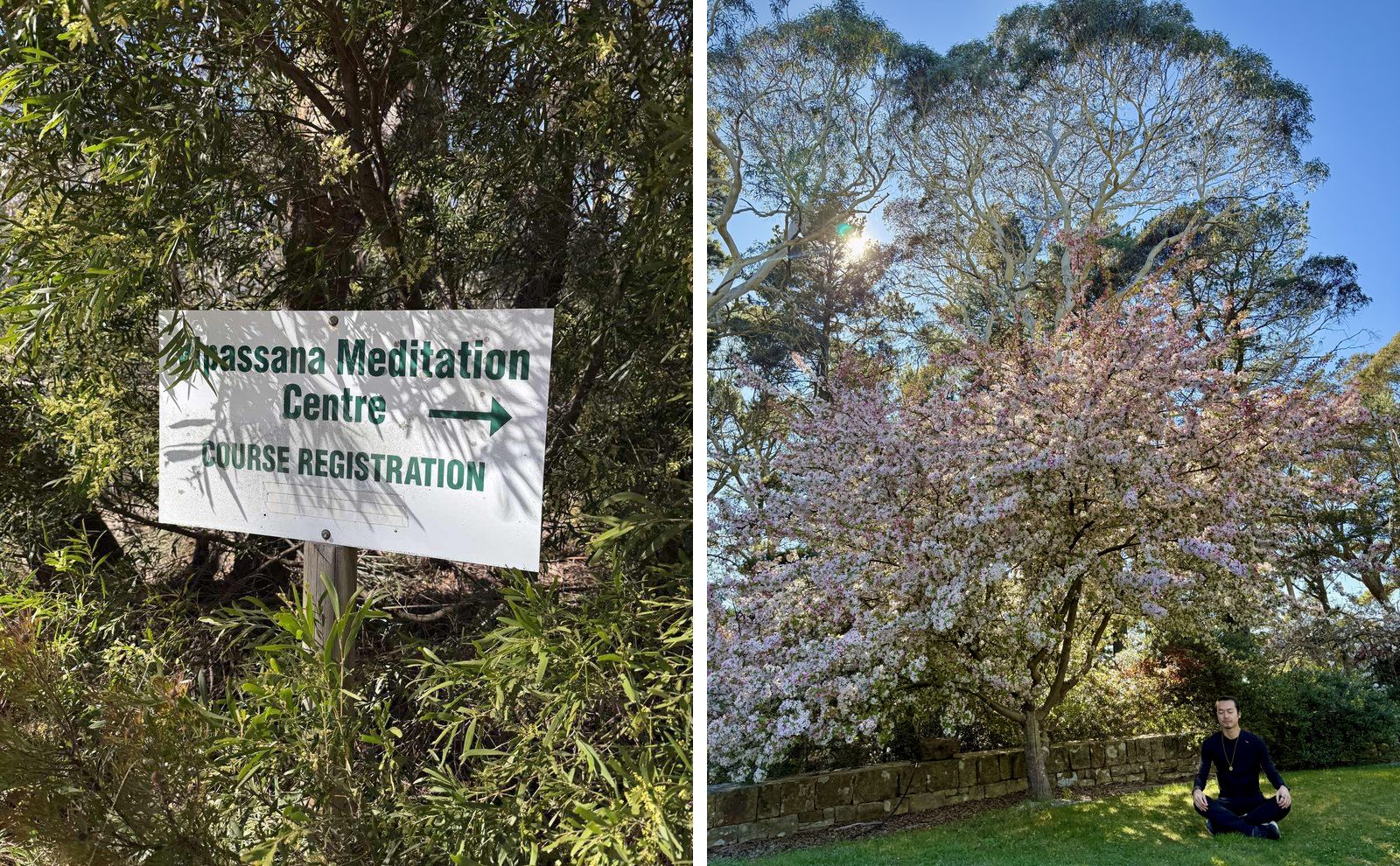
The 10-day Vipassana challenge: What it involves and what you should know
The rules
Every student agrees to these before Day 1:
- No talking. No gestures, no touching and no watching what others are doing either. This is called Noble Silence. (You can still speak to the teacher about your practice and to the student manager about practical things at the dedicated hour each day if needed.) Men and women are kept apart for the whole course.
- No phone, no technology, no music, no reading and no writing. Not even a journal.
- No other practices. Every spiritual or personal practice you bring with you, and any religious or spiritual objects, stays aside for the ten days. Exercise is limited to walking.
- Up at 4am, with 10+ hours of meditation across a day that ends around 9:30pm.
- Breakfast and an early lunch, then only tea and fruit in the late afternoon.
- Bonus challenge: No KILLING! I thought this would be the easiest one, for obvious reasons. But wait… it covers every living being, mosquitoes included. On Day 6, walking out of the meditation hall to pick up my water bottle, I came face to face with a mosquito the size of a spider. The next morning, a fly kept me company at the sink while I brushed my teeth. Both lived to tell the tale.
- Your room and meals are provided, and the course runs on donations from people who've already completed one.
It's not a holiday
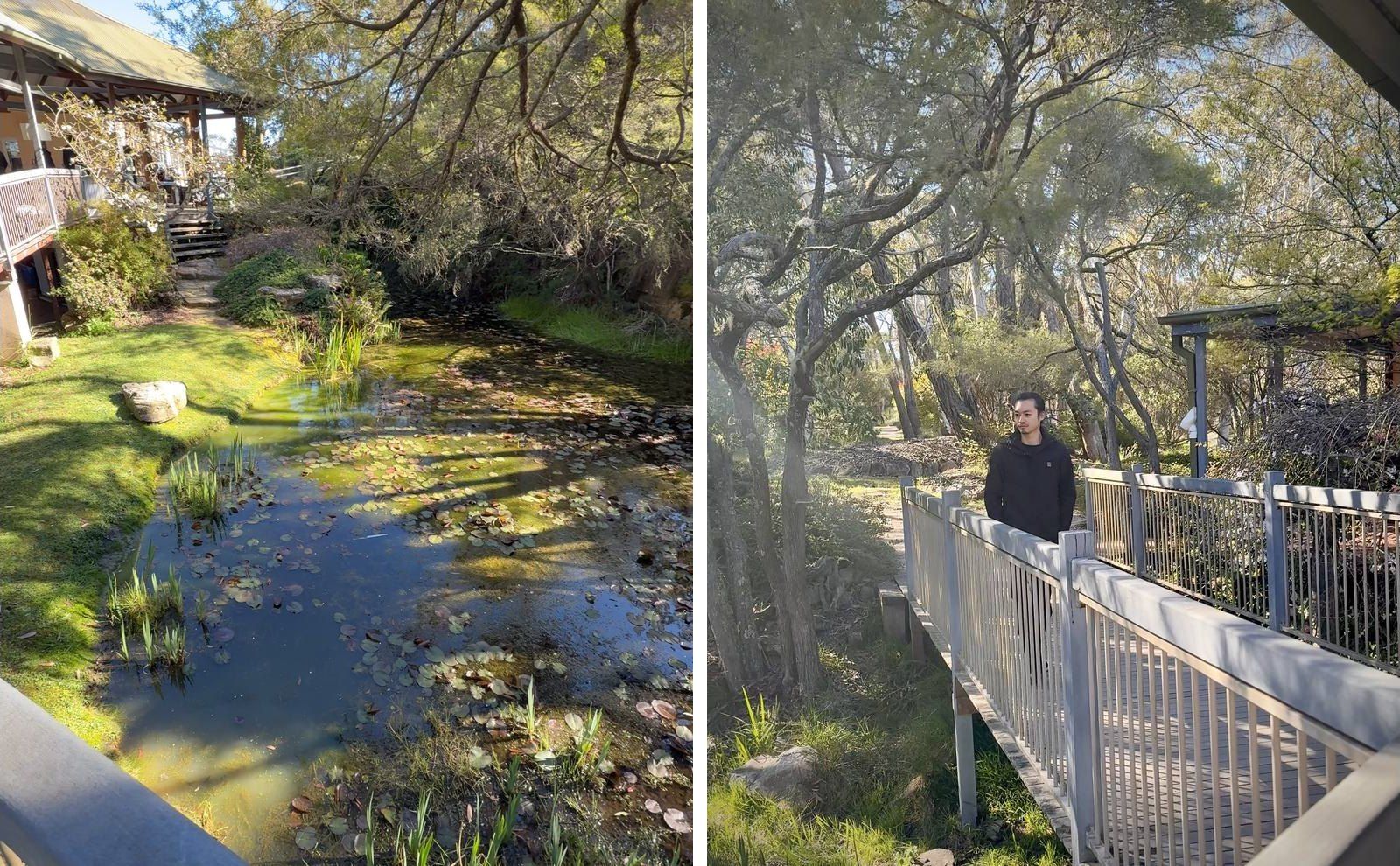
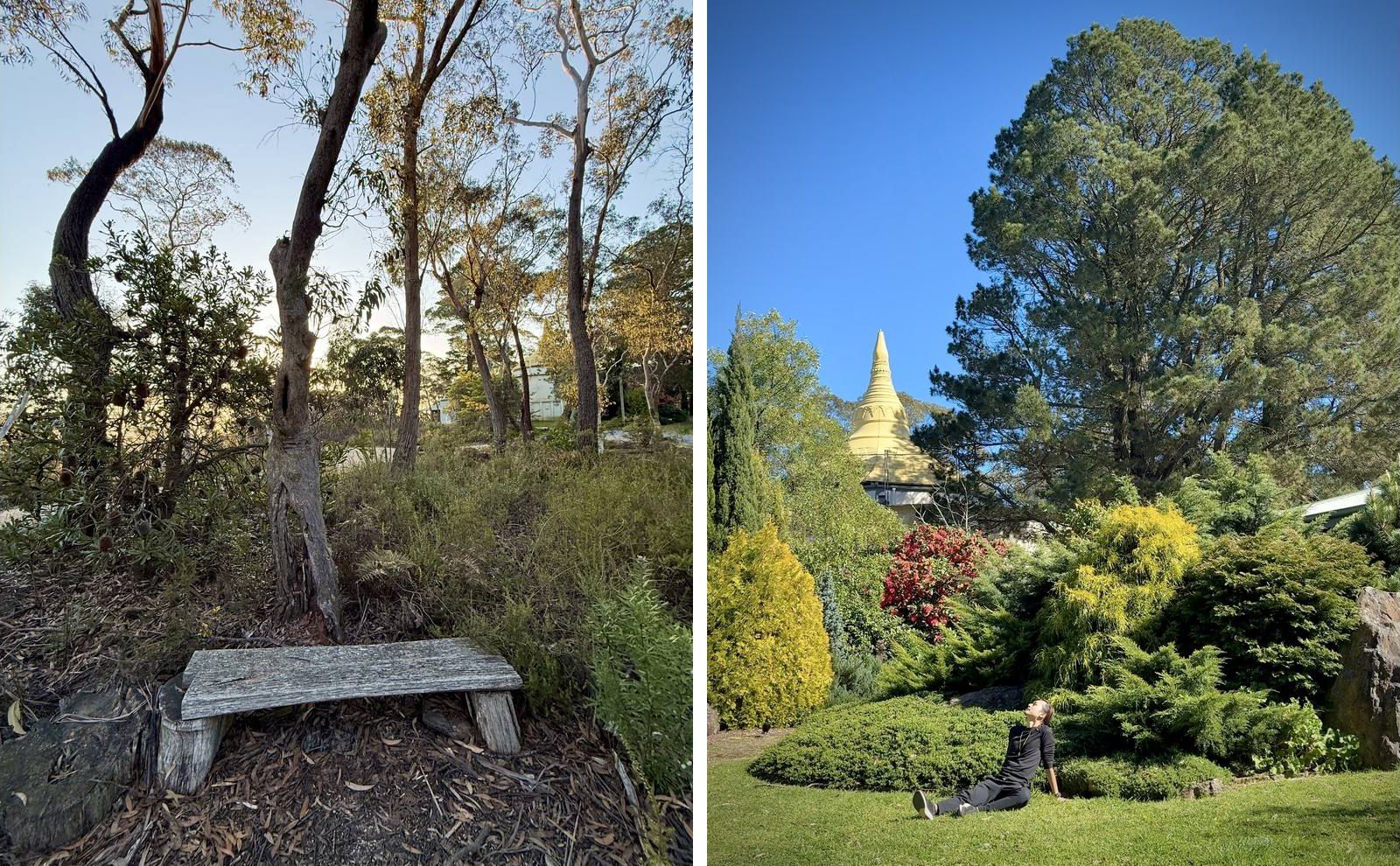
Before I arrived, I pictured 10 peaceful days in nature. The garden is stunning, to be fair. I even caught the flowering season at its peak, watched two rosellas in a tree of red and pink blossom, and saw the sun set over the Blue Mountains. Two kangaroos bounded past one evening, and the next day there was kangaroo poop right outside the meditation hall. I'd like to believe they were old students lol
But it's not a holiday. It's still work. Very deep work actually. The early starts, the long hours of sitting with nothing else to distract ourselves with (and a switch from my usual high-quality-fat, hypercarnivore diet to fully vegetarian meals. No eggs either, which surprised me.)
What I won't share here
I won't explain the meditation or the technique itself. It's taught on the course, students are asked not to teach it, and because it's something you need to experience for yourself. If you're curious, read more on dhamma.org.
Days 1 to 3: My mind went into withdrawal
Nowhere to hide
My body sat down in the meditation hall. My mind kept running somewhere else at inbox speed.
What it looks like: a silent hall, hour after hour, and inside my head: the next piece of content, the Japan trip just 2 weeks away, a conversation I was rewriting again, the separation conversation, a debate with someone who wasn't even there. I'd catch it, come back, and within a minute I was gone again. My face got hot. I got frustrated with myself for falling off the wagon over and over, in a room where nobody else made a sound. Add a headache, a blocked nose… you get the picture.
As one of my favourite teachers, Dr Joe Dispenza, teaches, we think more than 60,000 thoughts a day, and around 90 percent of them are the same as the day before. In silence, you meet every one of them.
My mind is a battlefield
In one of those sittings, a song got stuck on repeat in my head: "Armor" by Iniko. My mind is a weapon, and my body is a battlefield. Over and over.
And I was one thought away from quitting. Just stand up. Make an excuse, go to the toilet, anything. Take a rest. You've been working so hard.
I stayed. Not because of some toxic, masculine urge to push through, but because I knew full well this was what I'd committed to, a sovereignty from within, to become a better version of myself. Staying disciplined and seeing it through, as I'd determined to: that was the real magic.
Letting go of everything familiar
Then came the part I hadn't seen coming. Letting go of my own practices was far harder than letting go of my phone. None of the tools I teach or use, not even my martial arts or my stretches (yep, I was doing big stretches outdoors and was kindly reminded by the student manager not to do so). Those practices are what I know. They're where my mind goes to feel safe. Take them away, and it scrambles for something familiar, finds nothing and gets louder.
I realised the whole course is training us to be okay with the unknown, as it is. For those first three days, I wasn't okay with it at all. On Day 3, a short check-in with the teacher left me with three words I'd carry for the rest of the course: "as it is."
Days 4 to 7: The mud settles
When the noise stops
Picture a tank of water with a drop of black ink in it. Stir it and it stays murky. Keep adding ink and keep stirring, and it never clears. The only thing that clears it is patience: stop stirring and let it settle. That's our minds, with every notification, feed and AI tool swirling them all day long.
Noble Silence stops the stirring. Most of the time I walked with my head down, watching the path. It felt awkward at first, because ordinary life trains us to look up at every colour, sound and movement around us. Here there was nothing to reach for, and slowly the water began to clear.
By Day 4, I could see my thoughts well enough to sort them. Almost all of them fell into two piles: planning (content, work, future events) and rehearsing (conversations and debates playing out in my head). Then the gaps between them grew, and in those gaps was something I still find hard to describe. Mental silence. For me it came with a deep calm, because the commentary in my head stopped narrating everything and stopped reaching for something shiny to chase.
The hour I thought would break my legs
Around Day 6 came the multiple sittings of strong determination: a full hour without changing posture. I'll keep this light, because the details belong to the course. My mind panicked. How is that even possible? Pins and needles crept up my legs in 30 mins, then my body (or actually my mind) was screaming by 45 mins… and I was sure that if I stayed still any longer I'd do permanent damage.
I stayed. My legs were completely fine. That last 15 mins became the magic that unlocked something I couldn't articulate, yet (read on below).
By Day 7, I could sit for over an hour and a half. Stretching and martial arts weren't allowed, remember, so the change couldn't have come from my body. It made me wonder how much pain I've projected onto my own life over the years: the disasters I braced for that never came, or turned out far smaller than the story I'd told myself.
The cold that stopped hurting
That same morning, I stepped out of the shower into a freezing Blue Mountains spring morning, wet and shivering. The cold hurt. But for the first time I noticed there were two things happening: the cold itself, and everything I was adding to it. So I let the cold be cold. I acknowledged it as it was, dressed slowly and felt all of it, and it stopped being painful. Interestingly enough, reaching that mental silence somehow stopped my body from shivering at all, without any force.
Days 8 and 9: The fight, and a bowl of broccoli
Day 8: A small kindness
After another poor night's sleep, I woke with a red, swollen eye and a nose running like hayfever, and worked out that a lot of the cooking used rice bran oil, which doesn't agree with my gut and immune system. At lunch, the student manager helped bring me a small bowl of steamed broccoli in olive oil instead. In a place where nobody speaks, that bowl said plenty, alongside so much loving energy (they also call it mettā in Pāli).
Day 9: The "yesterday was better" story
Day 9 was the last full day of serious practice, and I was drowsy and unfocused. I felt defeated, and I kept thinking yesterday had gone deeper. Then I caught myself: comparing today with yesterday was one more story. There was no "what if". The drowsiness was part of what was here, and my job was to stay balanced with it.
Day 10: Speaking again
On Day 10 the silence lifted, and a hall full of people who hadn't spoken for nine days turned into a room of swapped stories and relatable experiences. (We still didn't have our phones. That came on Day 11, the day we left.)
What struck me most was how different we all were. Some were full-time workers, householders and dads. Some were entrepreneurs who had retired after a successful, millionaire life. Some were simply going with the flow, with no idea yet what they wanted to do with their lives. People from every walk of life, and yet the same human experience held true for every one of us: the battle with our own mind.
Listening to them, I noticed something in myself too. There's a layer of liberation inside me now, where my ego can't hold me back the way it used to, at least in many moments. I'm no Buddha, and I'm still a work of art in progress. But I felt a deeper layer of real happiness, real freedom and real harmony within, one that no other travel experience or modality had ever offered me.
Day 11 and the commute home: Hearing music differently
I'm a DJ, and I love, love, love my Spotify playlists. Yet coming out, I didn't feel the usual urge to fill every quiet moment with sound. When I finally put my headphones on during the five-hour train ride home, something had changed. It may sound strange, but the layers of the music were clearer than I'd ever heard them. I could feel the emotion behind each instrument, the rhythm, the motif, more deeply than before, and I've had years of music training. (If you've read about my music journey and how it shaped my emotions in Travel to Transform, you'll know that's saying something.) It was as if my sensitivity to everything had been turned up.
What did 10 days of silence teach me?
Ten days of silence taught me five things I'd only known in my head before.
1. Pain is one thing. Suffering is the story we add.
Physical pain is physical pain, as it is. Then we multiply it with mental pain: what it means, how long it'll last, what if it gets worse. That second layer is usually the heavier one. I felt it in my legs on Day 6 and in the cold on Day 7, and I see it everywhere now: a late train, a blunt email, a plan that falls through.
2. You don't have to open the door to every thought
After ten days I know my thoughts the way you know old friends. The assistant teacher gave me this analogy to help me understand "as it is" on a practical level: some keep knocking at the door, and I don't have to answer. If I leave them knocking and don't give them my attention, after a while they wander off. It's funny how many repeated thoughts and daydreams had been taking up room in my head, like apps running in the background and eating your phone's memory. Closing them feels fresh.
3. What you plant is what grows
Complain often and you'll find more to complain about. Life works a lot like a mirror here, showing us more of whatever we keep practising. Planting a mango seed gets you mangoes, not avocados!
4. Equanimity is a skill you train
Equanimity means a steady mind that doesn't grasp at the pleasant or push away the unpleasant. I've taught being "non-judgemental" on stage, and it sounds easy. Living it at this depth, with awareness and some kindness towards myself whatever came up, was a different thing entirely. I now think it's the most valuable thing a balanced mind can train, because a mind that can simply observe can weather almost any storm.
5. Peace in the world starts inside us
When we find peace within ourselves, the world will know peace too. It was one of the main themes of my TEDx talk. I also wrote about it in why mindfulness is the key to global unity, and I've taught it in my online courses and masterclass. But these ten days did more than deepen my "knowing". I felt it at a deep experiential layer, within the framework of my body, beyond anything words can capture or do justice to.
How do you bring the silence home?
When I got home and opened my laptop for the first time in eleven days, a verse from my Christian upbringing surfaced in my mind: "Do not conform to the pattern of this world, but be transformed by the renewing of your mind." (Romans 12:2, NIV)
That's the integration work. You can start without ten days in the mountains (although I'd highly recommend the experience to anyone still reading). It begins with how you meet what's already on your plate. How to NOT react to those ping, ding and ring with the negative charges of emotion the same way I did before doing Vipassana.
On Day 5, I sat with a question: When did I lose the excitement I used to feel about what was ahead of me? The answer surprised me. Somewhere along the way I'd turned too much of my life into a chore, a list of tasks to deliver perfectly, and that perfectionism had been keeping me from being present. Measuring external achievements to prove my worth. But the truth is, I am already enough.
Again, intellectually it's easy to understand. But only when we truly sit in a space to examine our own mind, into every corner and every shadow we have yet to shine light on, does the honest answer really come through. The importance of the experiential layer of human experience!
So this is my practice now: meet whatever comes next with excitement, gratitude and presence. When messages and emails pile up, I'd rather meet them as they are than react to every one. And I'll prep for my next trip to Fukuoka, Japan (which I'm flying off to in two days as I'm writing these;))
Try it this week. Pick one thing on your calendar that's started to feel like a chore, and show up to it without needing to perform.
Mistakes I made, so you don't have to
If you're thinking of sitting a course, here's what I'd do differently:
- Slow down before you go. I worked right up to registration and arrived spinning, which made my first three days harder. Give yourself some quieter days beforehand, in mind and body.
- Don't expect a holiday. The setting is beautiful, and the ten days are still hard work on yourself. Go in ready to put in the effort, and you'll get far more out.
- Prepare your body as well as your mind. The 4am starts, the long sittings and a new way of eating all arrive at once.
- Let the silence do its work. Walking with my head down felt strange at first, and it turned out to be where the calm began.
- Don't wait for the wake-up call. This one's bigger than the course. Before Vipassana, I was a bit like someone who hadn't showered for long time, running and sweating every day, and kept putting on perfume to convince myself it was okay. Most of us wait for a wake-up call before we change, and that call usually arrives as a major disruption. Don't wait for it to find you.
Should you try a 10-day Vipassana retreat?
If you're willing to do the work, YES. It's one of the most transformational experiences of my life so far, and the deepest inner work I've ever done on myself, like surgery on my mind at a layer I didn't know I could reach. It's also intense, and it isn't right for everyone at every moment, which is why centres ask about your physical and mental health when you apply. Respect that.
Bridging the outer and inner journey is at the heart of my work. I've spent over a decade travelling across 35+ countries, and I've written or co-authored four books, including my bestselling Travel to Transform, on the inner journey that travel can open. Even so, these ten days took me further than any flight. If that stirs something, it's worth rethinking what travel is for too.
Before the course, I asked on Instagram whether you'd meet a whole new version of me afterwards. I'll let you be the judge. What I can tell you is that the water's clearer and the knocking's quieter.
From the bottom of my heart, I'm truly grateful to everyone who cooked, served and sat in that hall so the rest of us could do this work: the assistant teachers who guided us through Goenka's teaching, my student manager, and everyone whose donations keep the centre running so that someone else can sit, just as I did. Part of me is already looking forward to going back for another "surgery on the mind", on my inward journey to know thyself.
Before you go: Three questions
Take ten minutes with these. Write your answers down, and don't skip this part.
Where in your week does the water never get to settle? Pick one moment, a commute, a queue or the first ten minutes after you wake, and leave it silent this week.
What struggles are you mentally multiplying right now? Write down the plain fact, then the story you've added to it, and notice which one weighs more.
Which thought keeps knocking at your door? This week, let it knock, and keep the door shut. Try to observe it as it is, with no attachment to any specific outcome. See how you’d feel differently <3
With love & travel-spiration xx
Freeman 🌏🪽
Keep travelling inwards with me
If you're a traveller who has already seen a fair bit of the world, and you're starting to sense the next stretch is inwards, this is for you.
I write to my list with stories like this one: what I'm learning from travelling outwards and inwards, and the free resources I make for you along the way.
Travel isn't just an escape. It's a gateway to our personal evolution.
Join the newsletter →Free, and you can unsubscribe any time. Already on my list? You're in. And if you're ready to do the inner work itself, read on just below.
The most powerful journey is the one inwards
Travel isn't a reward you earn for working hard, it's a gateway to extraordinary living, and what you meet out there only changes you if you've built the inner capacity to receive it.
That belief is why I built the Travel Mastery Blueprint even before I ever sat a Vipassana course. Sooner or later, every conscious traveller needs their own blueprint instead of someone else's map. Self-mastery on the inside, your values, purpose and inner compass, designed together with the outer side: money, logistics, cultural confidence and wellbeing. Self-paced, and my book comes with it.
Build your own blueprint →Vipassana retreat FAQ
Are food and accommodation included on a Vipassana retreat?
Yes. Your room and all your meals are provided for the whole course, and there's no fee: it runs on donations from people who've already completed one. It's an incredible gift, and I'd highly recommend it. Go in knowing it's hard work on the inside, though, and nothing like a chilled holiday.
Is Vipassana religious? Can I keep my own faith?
The course is non-sectarian, and people of every faith and none take part. For the ten days you're asked to set aside your own religious and spiritual practices and objects, whether that's prayer beads, crystals or a Bible, so the technique can be tried on its own terms. For me, stepping away from my own practices for ten days gave me a much clearer understanding of them.
Can you use your phone during Vipassana?
No. Phones are collected at registration, kept locked away and returned when the course ends, which is a big part of why the silence works. Every photo in this post was taken before phones were collected or after the course ended, with the centre's permission.
Do you need meditation experience to do a 10-day Vipassana course?
No. The course teaches everything from the beginning, and plenty of people sit their first one with no experience at all. I'd practised for years and still found it the hardest mental work I've done.
Why is a Vipassana course 10 days long?
According to dhamma.org, anything shorter isn't enough time for the mind to settle down and work deeply. That matched my experience: my mind was in withdrawal for the first three days and only began to settle around Day 4.
Can you leave a Vipassana course early?
You're asked to commit to the whole course, which runs 12 calendar days including arrival and departure. There were sittings when I wanted to walk out of the hall, and staying was where the real work happened.
What if you can't sit cross-legged for an hour?
Chairs are available for anyone who needs one, and you can use cushions to find a posture that works. It took me until Day 7 of experimenting with cushions to find a setup that let me sit for over an hour and a half.
Where does Vipassana come from, and where is Dhamma Bhumi?
The 10-day courses are taught in the tradition of S.N. Goenka, who learned the technique in Burma (now Myanmar) from Sayagyi U Ba Khin and began teaching in India in 1969. Centres now run the same course around the world, including Dhamma Bhumi in Blackheath, in the Blue Mountains of New South Wales, west of Sydney.